
Which Is Better for Your Business: Samsung QBC Series or an LED Video Wall?
 Choosing a business display can look straightforward until you start comparing actual installation requirements.
A company may need a screen for a conference room. A retailer may want a large visual display in a showroom. A corporate office may want something impressive for a reception area. And a control room may need a much larger, always-visible display surface.
In all of these situations, putting a bigger screen on the wall isn't necessarily the answer.
The real decision is between what the space needs and what the display technology is designed to deliver.
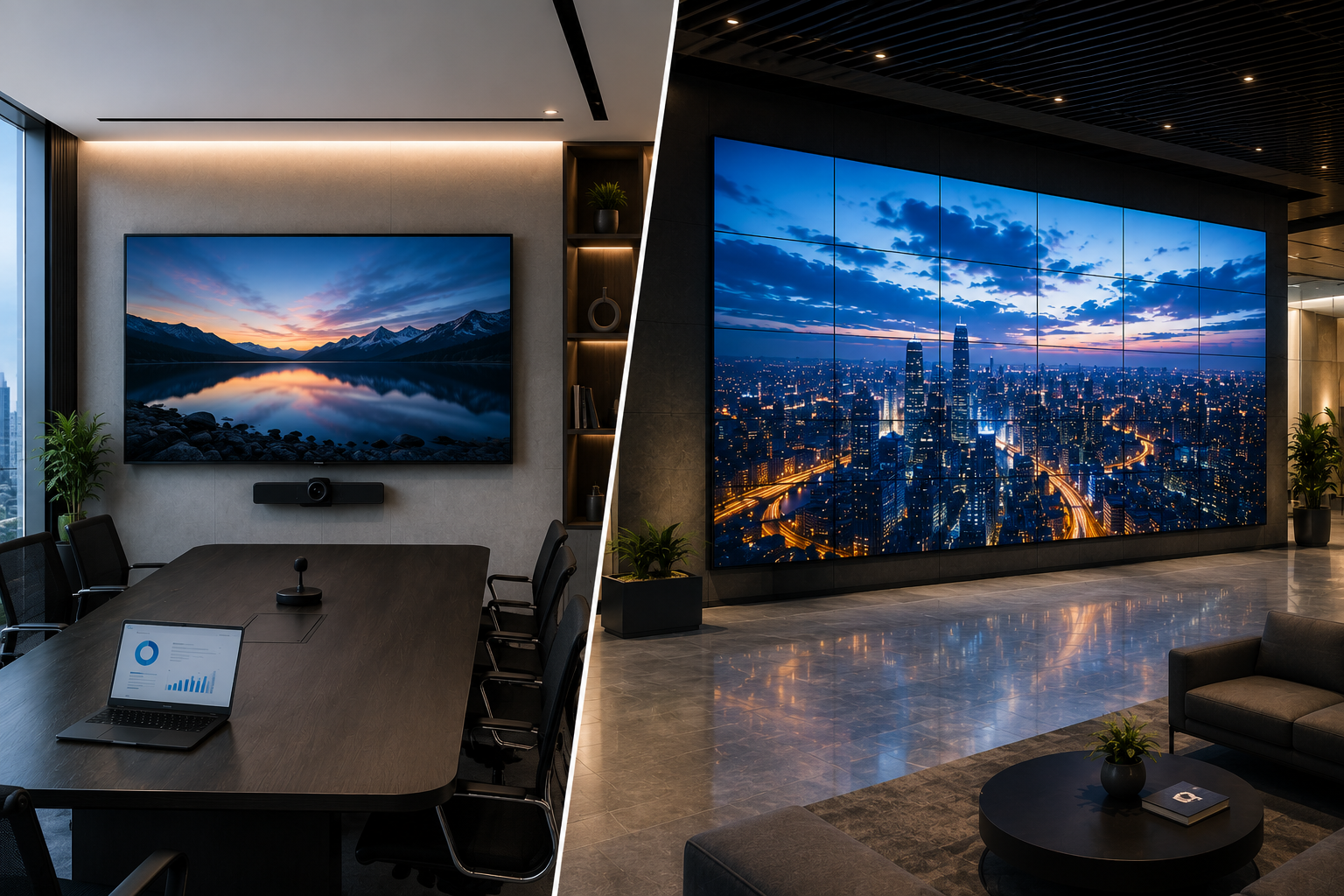
This is where Samsung QBC Series vs LED Video Walls becomes an interesting comparison. Both can deliver strong visual experiences, but they approach the problem very differently.
The Samsung QBC Series is a professional 4K UHD display range available in individual screen sizes, while LED video walls are built from LED modules or cabinets to create a much larger, scalable display surface. Samsung itself positions UHD 4K signage and LED/video-wall products as different categories within its business display portfolio.
So which one makes sense for your company?
It depends on the job.
What Is the Difference Between a Samsung QBC Display and an LED Video Wall?
At a basic level, the difference is quite easy to understand.
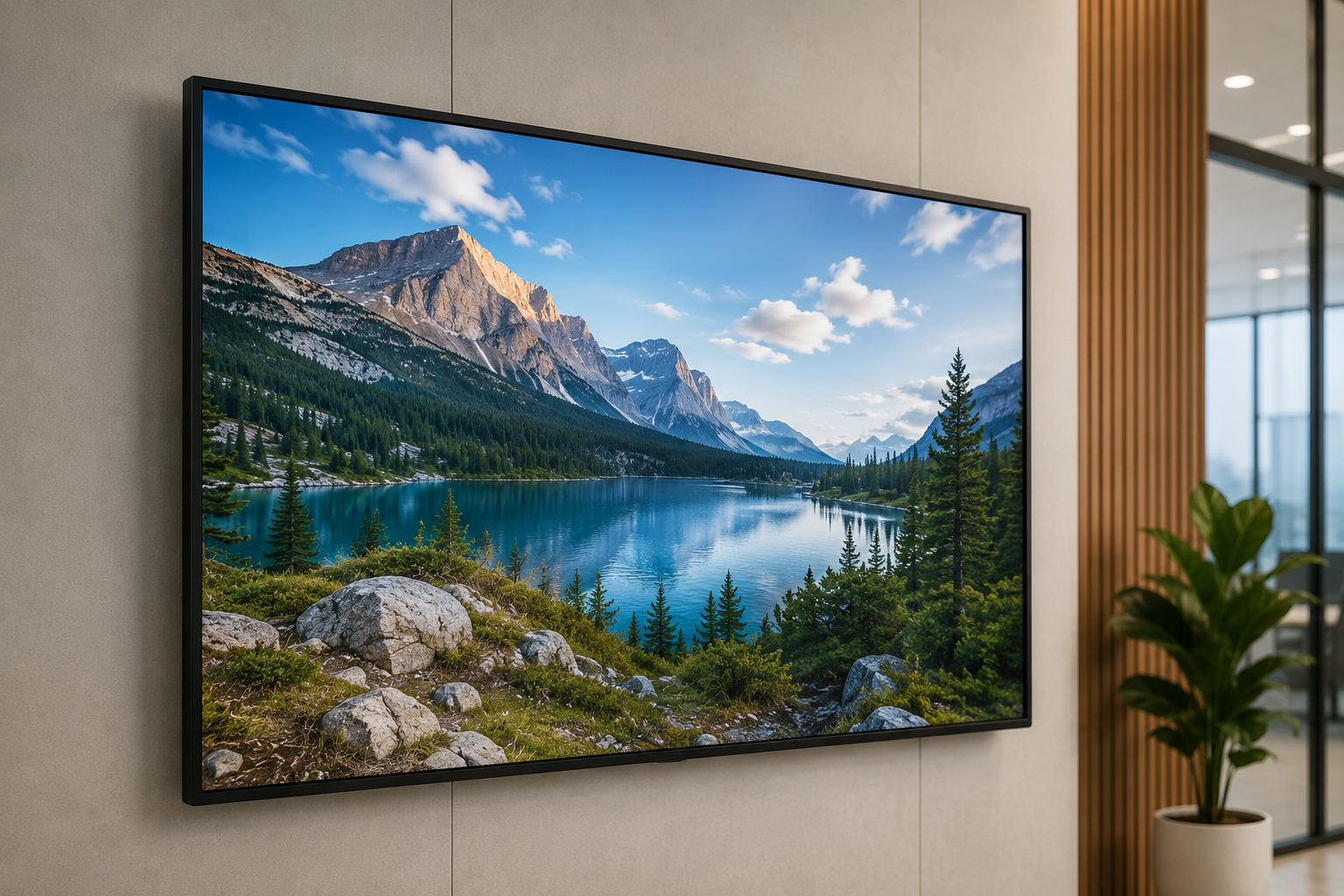
A Samsung QBC display is a complete professional display panel. You select the required screen size, install it, connect your sources and use it as a large business screen.
An LED video wall takes a different approach. Multiple LED modules or cabinets are combined to create a larger visual surface. Samsung's LED range includes indoor and outdoor solutions as well as dedicated video-wall products.
Think of it this way:
- QBC: one complete display
- LED video wall: multiple display elements working together
- QBC: defined screen sizes
- LED: more flexibility in overall size and configuration
- QBC: straightforward for many business installations
- LED: better suited to applications where a very large or customised visual surface is required
Neither approach is automatically better.
The question is whether you actually need what the LED solution offers.
When Does the Samsung QBC Series Make More Sense?
For many businesses, the simplest solution is also the most practical.
A QBC display can make sense when you need a professional screen for a defined space rather than an entire wall-sized installation.
Typical applications include:
Corporate meeting rooms
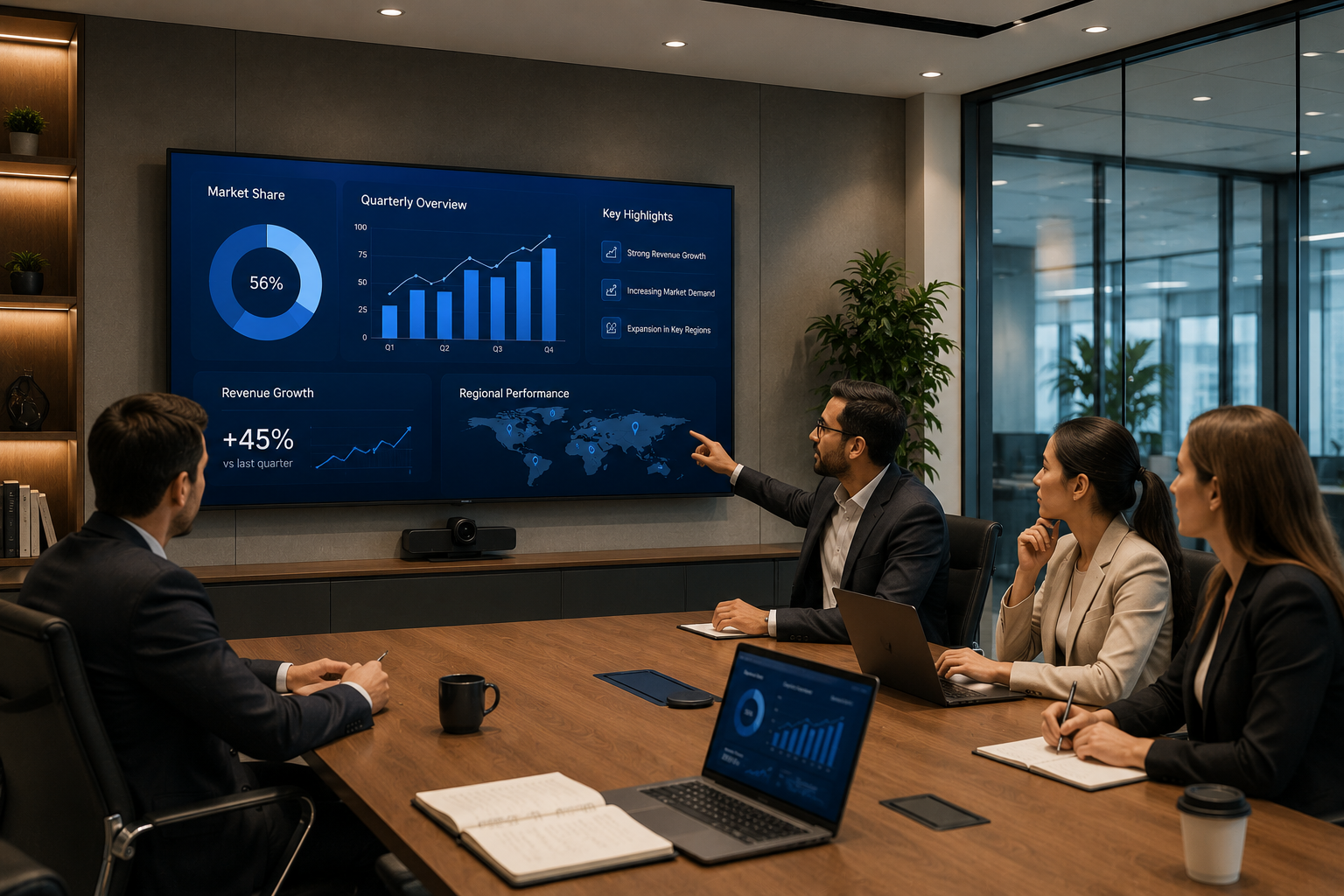
If the main requirement is presentations, video meetings, dashboards or internal communication, a single 4K display can be a sensible choice.
Offices
A professional display can be used for:
- Presentations
- Training
- Company announcements
- Dashboards
- Video content
- Internal communication
Retail and showrooms
A QBC display can provide high-resolution promotional and product content without requiring a large modular LED installation.
Reception areas
If the goal is to create a clean, professional visual point without covering an entire wall, a single display may be enough.
Education and training
For classrooms and training rooms, the decision often comes down to viewing distance and audience size.
If everyone can comfortably see one screen, building an LED wall may be unnecessary.
That's an important point: don't buy complexity you don't need.
When Does an LED Video Wall Become the Better Option?
There are situations where a single display simply isn't enough.
Imagine a company has a large reception wall that is several metres wide.
You could install one large display, but there is a physical limit to how large a conventional panel can be.
This is where an LED video wall becomes much more interesting.
LED solutions are designed for large-scale viewing and can be configured for different environments. Samsung's business portfolio includes indoor LED, outdoor LED and video-wall solutions for large visual applications.
An LED video wall may make more sense when you need:
- A very large viewing area
- A custom screen shape or configuration
- Strong visual impact in a large space
- Content visible from significant distances
- A large-scale corporate or retail installation
- A dedicated control-room display environment
- A more immersive visual experience
For example, Samsung's VHR-R video-wall series is designed around narrow bezels, while Samsung also offers LED solutions intended for large-scale viewing environments.
So if the project brief says “we want the display to become the entire visual feature of this wall,” you're no longer really comparing two ordinary screens.
You're considering a different type of installation.
Samsung QBC Series vs LED Video Walls: How Do They Compare?
Here's the practical comparison.
| Factor | Samsung QBC Series | LED Video Wall |
|---|---|---|
| Basic setup | Single professional display | Multiple LED modules/cabinets |
| Typical use | Offices, meetings, retail, signage | Large-scale visual installations |
| Resolution | 4K UHD on QBC models | Depends on LED solution and configuration |
| Size flexibility | Available in defined screen sizes | Highly scalable |
| Installation | Generally simpler | More specialised |
| Custom configurations | Limited compared with LED | Greater flexibility |
| Large-wall applications | Less suitable | Strong fit |
| Meeting rooms | Very suitable | Often unnecessary |
| Large reception areas | Suitable depending on size | Useful for major visual installations |
| Control rooms | Suitable for some applications | Strong option for large-scale visibility |
| Complexity | Lower | Higher |
| Investment | Typically simpler to plan | Depends heavily on size, pixel pitch and configuration |
The important word here is “typically.”
LED video walls aren't all the same. Pixel pitch, brightness, cabinet design, processing, installation requirements and operating environment can change the project significantly.
Likewise, QBC models differ by screen size and configuration.
So don't treat this table as a substitute for a project assessment.
Use it to decide which direction deserves a closer look.
Is 4K Digital Signage Enough for Your Business?
For many businesses, yes.
If your requirement is straightforward digital signage or presentation content, 4K digital signage can provide plenty of visual detail.
The QBC range is built around UHD 4K resolution, and Samsung lists QBC models across multiple screen sizes.
That makes a QBC display particularly practical when the content needs to remain sharp and readable without creating a large-scale LED installation.
For example, consider a 55-inch or 65-inch display in a meeting room.
If everyone can see the presentation clearly, what business problem would an LED wall solve?
Probably none.
That's why I wouldn't recommend LED simply because it sounds more advanced.
Technology should solve a problem, not create a bigger specification sheet.
What About Cost and ROI?
This is where the comparison gets more interesting.
The cheapest option on the quotation isn't necessarily the option with the lowest total cost.
A business should consider:
- Display hardware
- Mounting
- Installation
- Cabling
- Processing equipment
- Content management
- Maintenance
- Future replacement
- Downtime
- Scalability
A single business display can be easier to plan and deploy when the requirement is relatively straightforward.
An LED video wall may involve more planning because the installation can include multiple components and a more specialised setup.
But that doesn't mean LED offers poor ROI.
If a large LED wall becomes a central part of a showroom, brand experience, corporate lobby or control room, its visual impact may justify the additional investment.
The right question is:
What business outcome are you paying for?
If the answer is simply “we need something to show presentations,” a QBC display may be the more sensible route.
If the answer is “we want a large-scale visual centrepiece that customers see as soon as they enter,” LED becomes more compelling.
Which One Is Better for Meeting Rooms?
For most ordinary meeting rooms, I'd start with the QBC option.
Why?
Because the requirement is usually quite straightforward:
- Present presentations
- Display documents
- Conduct video meetings
- Show dashboards
- Share information with a group
A single appropriately sized screen can handle that job without turning the meeting room into an AV project.
An LED wall may be justified for a very large boardroom, executive experience centre or specialised corporate environment, but it shouldn't be the default answer.
Match the technology to the room.
Don't make the room adapt to the technology.
Which One Is Better for Retail and Showrooms?
Here, the answer is less obvious.
A QBC display can work well when you need focused content in specific locations:
- Product demonstrations
- Promotional campaigns
- Brand videos
- Product information
- Digital menus or announcements
An LED wall becomes more interesting when the visual itself is supposed to dominate the space.
For example, a flagship showroom with a large feature wall may benefit from a seamless large-format LED installation.
Samsung's retail display portfolio includes both indoor LED and video-wall solutions, reflecting the fact that retail environments can require very different display approaches.
So ask yourself:
Do I need a display on the wall, or do I want the wall itself to become the display?
That one question can clarify the decision surprisingly quickly.
What About Maintenance and Long-Term Operations?
This part doesn't get enough attention during the buying process.
Everyone talks about picture quality when the system is new.
Nobody wants to talk about what happens two years later.
Before choosing either solution, ask:
- Who will maintain the display?
- How quickly can issues be diagnosed?
- Are spare parts or modules available?
- Who handles technical support?
- How difficult is it to access the installation?
- Can the system be expanded later?
- What happens if part of the display fails?
With LED, the modular nature of the technology can be useful, but it also means the project should be planned properly.
For example, Samsung's LED solutions can involve modular cabinets and specialised installation approaches depending on the series.
For a business, the best solution isn't simply the one that looks impressive on day one.
It should still make operational sense years later.
So, Samsung QBC Series vs LED Video Walls: Which Should You Choose?
There's no universal winner in the Samsung QBC Series vs LED Video Walls debate.
The better option depends on what you're trying to achieve.
Choose the Samsung QBC Series when:
- You need a professional 4K display
- The installation has a defined screen size
- You're setting up meeting or conference rooms
- You need office or reception displays
- Your digital signage requirements are straightforward
- You want a relatively simple deployment
Consider an LED video wall when:
- You need a very large display surface
- The wall itself is part of the visual experience
- You need greater configuration flexibility
- The installation is for a flagship showroom or major lobby
- You need large-scale visibility
- The project justifies a more specialised display solution
And there's a third possibility that businesses sometimes overlook:
You may not need either one at the extreme end of the scale.
Sometimes the best answer is simply a properly sized professional display installed in the right place.
Final Verdict: Which Display Solution Fits Your Business?
The Samsung QBC Series vs LED Video Walls decision shouldn't be made by asking which technology is more impressive.
It should be made by asking which one solves your actual business requirement with the least unnecessary complexity.
For a meeting room, office, reception area or focused digital-signage application, the Samsung QBC Series can be a practical direction to explore.
For a large-scale visual installation where the display itself needs to become a major architectural or customer-facing feature, an LED video wall may be worth the additional planning.
Before making the final decision, compare:
- Required screen size
- Viewing distance
- Content type
- Installation environment
- Brightness requirements
- Operating hours
- Connectivity
- Maintenance
- Future expansion
- Total cost of ownership
The most expensive display isn't necessarily the best investment.
And the simplest display isn't necessarily the cheapest in the long run.
The right solution is the one that gives your business the visual performance it needs without paying for complexity it doesn't.
That's the comparison worth making before signing the purchase order.