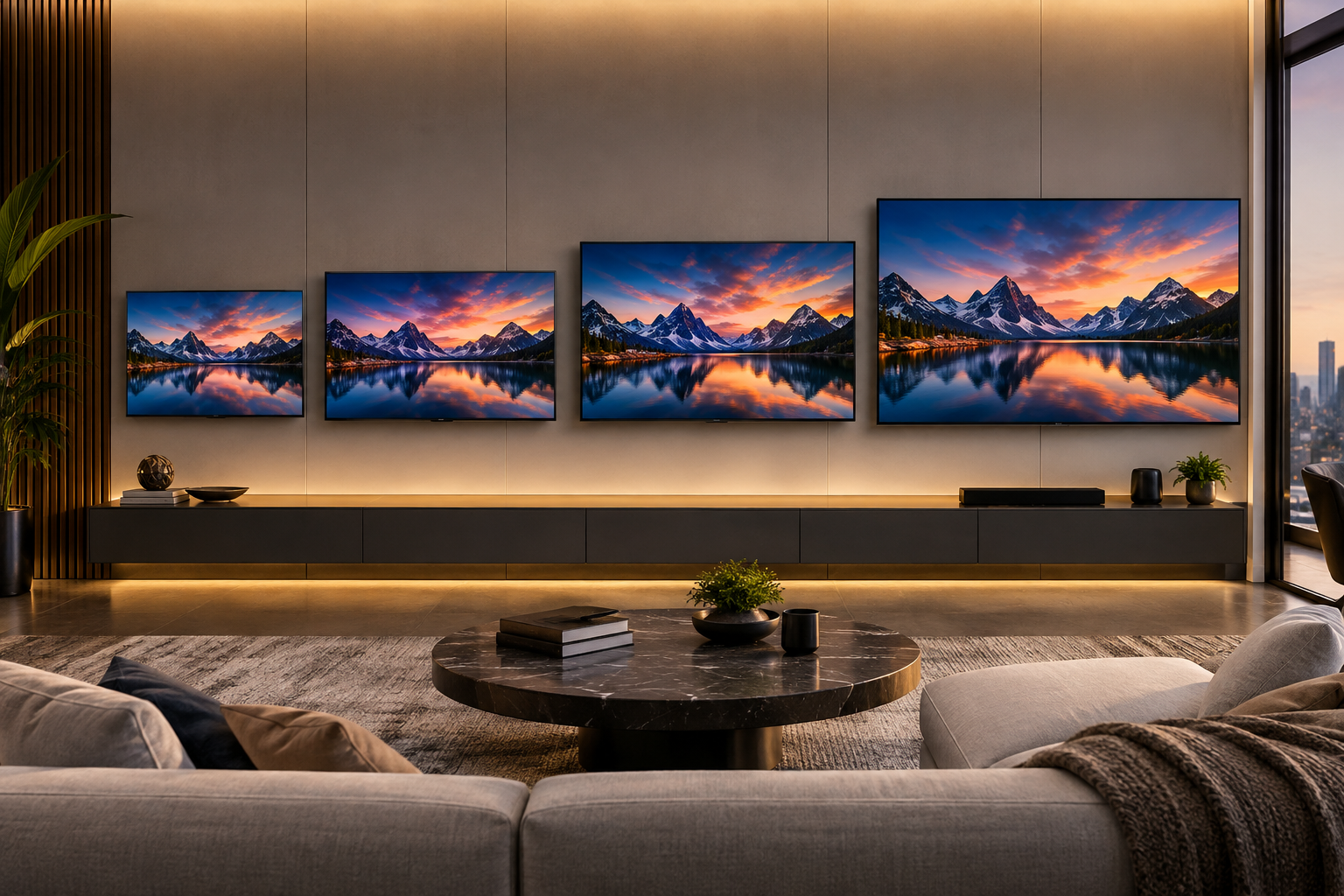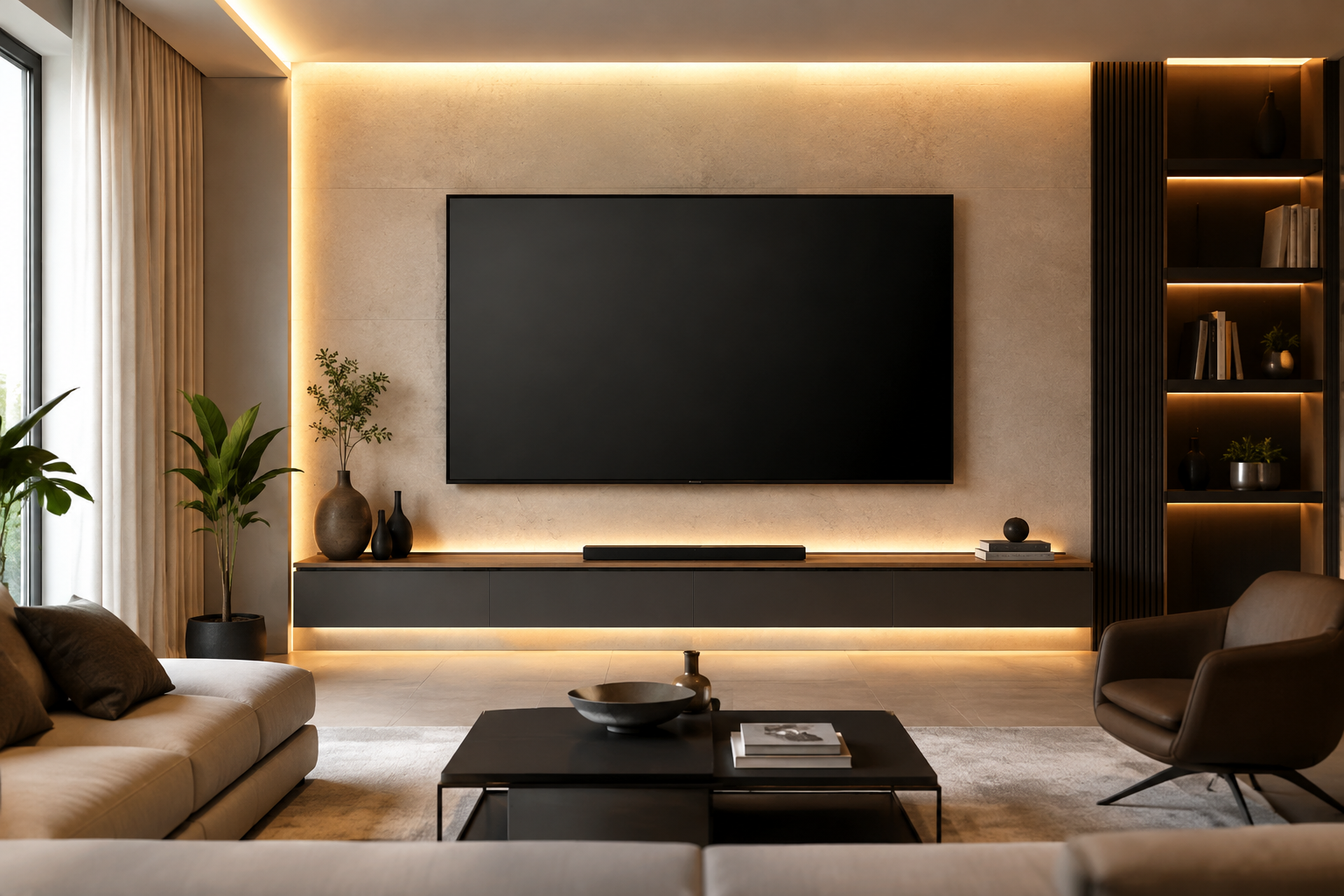



There is a funny thing about buying a TV.
You can spend hours looking at specifications, compare brightness, refresh rates, speakers and smart features, and then end up making the decision based on one simple question:
Will this size look right on my wall?
And honestly, that question matters more than people think.
A TV can look perfect in a showroom and completely different once you put it in your living room. The showroom is huge, the ceiling is high and you are usually standing several feet away from the screen. Your living room is a different story. There is a sofa, a coffee table, a cabinet, windows, wall décor and maybe a few people sitting around.
This is where choosing the right VU Masterpiece Frame TV size becomes important.
The range comes in 55, 65 and 75 inches. All three can make sense. The trick is figuring out which one fits your room rather than simply choosing the largest screen available.
First, forget the idea that bigger is always better
We've all heard it before.
“Go for the bigger one. You'll get used to it.”
Sometimes that's true. Sometimes it isn't.
If your sofa is quite close to the TV, a huge screen can feel overwhelming. You may find yourself moving your eyes around the screen instead of simply watching the content.
Then there is the wall itself.
A 75-inch television needs breathing room. Put it on a narrow wall between two pieces of furniture and the whole setup can start looking crowded.
On the other hand, put a 55-inch screen on a very wide wall and it can look a little lost.
So before looking at prices, look at the room.
That is usually the better starting point.
Is the VU Masterpiece Frame TV 55 inch enough?
For a smaller living room, yes.
The VU Masterpiece Frame TV 55 inch is probably the easiest one to live with if you don't have a lot of wall space.
Think about a typical apartment living room. The sofa may be only a few metres from the TV wall. You might have a compact TV unit underneath, some shelves on the side and a window nearby.
In a room like that, 55 inches can look very comfortable.
It doesn't mean you're compromising on having a premium-looking TV. It simply means the screen isn't fighting with everything else in the room.
I'd consider 55 inches if:
- Your living room is on the smaller side.
- The sofa is relatively close to the TV.
- The wall isn't very wide.
- You prefer a clean, balanced interior.
- You mostly watch TV, YouTube and streaming services.
- You don't want the television to become the only thing people notice.
There is also something to be said for proportion.
A beautifully designed room can lose some of its charm when the TV is simply too large for the space.
When does 65 inches start making more sense?
This is where things get interesting.
For a lot of homes, the VU Masterpiece Frame TV 65 inch sits in that comfortable middle ground.
It feels noticeably larger than a 55-inch screen, but you don't necessarily need a huge room to make it work.
Let's say you have a decent-sized living room. Your sofa is positioned a reasonable distance from the TV wall. You watch cricket on weekends, movies at night and probably spend far too much time scrolling through Netflix trying to decide what to watch.
In that situation, 65 inches makes a lot of sense.
You get more screen area for movies and sports, but the TV can still sit naturally within the room.
I'd especially look at 65 inches if:
- You have a medium or large living room.
- More than two or three people regularly watch together.
- You enjoy movies and sports.
- You want a noticeable screen without going huge.
- Your TV wall has enough width.
- You want the television to look like part of the interior rather than an oversized display.
For many buyers, this is the size I'd check first.
Not because it is automatically “the best,” but because it tends to work in a wider range of rooms.
What about the 75-inch version?
Now we're talking about a different kind of setup.
The VU Masterpiece Frame TV 75 inch is for someone who actually has the space to use it.
Imagine a wide living room, a large wall and a sofa that sits comfortably away from the screen. That's where a 75-inch TV starts to feel right.
Movies become more immersive. Sports feel bigger. Even ordinary 4K content has more impact simply because there is more screen in front of you.
But there is a catch.
Don't buy 75 inches just because you have the budget for it.
Measure first.
Seriously.
Take a measuring tape and check the wall. Look at where the sofa is going to sit. Think about the furniture underneath it. Then look at how much empty space will remain around the TV.
If the screen leaves almost no breathing room, I'd reconsider.
A large television should look intentional. It shouldn't look as if you accidentally bought a screen that was meant for a much bigger room.
Your sofa may actually decide the size
This is the part I would pay the most attention to.
Forget the showroom for a minute.
Sit on your sofa.
That's where you'll actually watch the TV.
If you are sitting relatively close, a 55-inch screen may already feel substantial. Move farther back and suddenly a 65-inch screen starts looking much more attractive.
Move even farther away and 75 inches begins to make sense.
So when deciding between the three sizes, ask yourself:
How far will I actually sit from the screen?
Don't measure from the TV wall to the edge of the room. Measure from the screen to your normal viewing position.
That small difference matters.
What kind of living room do you have?
Your room tells you quite a lot.
A compact apartment living room
I'd look at 55 inches first.
You probably don't need a massive screen, and keeping some visual space around the TV can make the room feel larger.
A normal family living room
This is where 65 inches becomes interesting.
You have enough space for a larger display, but you don't necessarily need the biggest one.
A large open living room
Now I'd seriously consider 75 inches.
Especially if the seating area is farther away and the TV wall is wide enough.
An entertainment-focused room
If the room is mainly used for movies, sports and gaming, size becomes more important. In that case, 65 or 75 inches could be the better fit depending on your seating distance.
Don't forget the wall around the TV
A frame TV changes the way you think about the wall.
With a normal television, you may simply think, “Put the TV here.”
With a frame-style design, the surrounding area becomes part of the look.
Maybe you have:
- Artwork
- Wooden panels
- Wall lighting
- Decorative shelves
- Plants
- A console
- Family photographs
All of these things compete for visual attention.
That's why I wouldn't decide the screen size in isolation.
For example, a 75-inch TV might technically fit on your wall, but that doesn't mean it will look good there.
Sometimes leaving a little empty space around the screen makes the entire setup feel more expensive.
Does the way you use your TV matter?
Definitely.
Someone who watches the news for half an hour in the evening doesn't necessarily need the same screen as someone who watches three-hour movies on Saturday night.
Think about your normal routine.
If your TV is mostly used for:
- YouTube
- News
- Casual streaming
- Family shows
- Background entertainment
55 or 65 inches could be perfectly comfortable.
If you're regularly watching:
- Movies
- Cricket
- Football
- Gaming
- 4K content
- Streaming series
then moving up to 65 or 75 inches becomes easier to justify.
You're going to notice the extra screen area much more.
What if your living room also has a professional setup?
For business owners, founders and senior professionals, the living room sometimes doubles as a casual work or presentation space.
You might use the screen for a video call one moment and watch a movie later that evening.
In a larger room, a bigger display can also make presentations easier for people sitting farther away.
But again, this doesn't mean “buy the biggest one.”
It means the screen should be large enough for everyone in the room to see comfortably.
That's a much better reason to move from 55 to 65 or 75 inches.
55 vs 65 vs 75: How would I choose?
If I were standing in a showroom trying to decide, I'd keep it simple.
Pick 55 inches when:
- The room is compact.
- Seating is fairly close.
- Wall space is limited.
- You want a quieter, more balanced look.
Pick 65 inches when:
- The room is medium or large.
- You want a strong viewing experience without going oversized.
- You watch movies and sports regularly.
- You want the most flexible option.
Pick 75 inches when:
- You have a genuinely large wall.
- Your seating is farther away.
- The room has enough visual space around the screen.
- You want a more cinema-like experience.
And if you're somewhere between two choices, don't immediately choose the bigger one.
Go back to the wall measurements.
So, which is the best VU Masterpiece Frame TV size?
For most living rooms, I'd personally start with 65 inches.
It has enough presence to make the screen enjoyable for movies and sports, but it doesn't require an enormous room. It also gives you more freedom when arranging the rest of the wall.
The 55-inch model makes more sense when space is limited.
The 75-inch model is the one I'd choose when the room genuinely calls for it.
And that's really the point.
The best VU Masterpiece Frame TV size isn't decided by the number printed on the box. It's decided by the distance between your sofa and the wall, the size of the room and how the TV fits with everything around it.
Before you order, take five minutes.
Measure the wall.
Measure the sofa distance.
Look at the furniture.
Then picture yourself sitting there on a Sunday evening watching your favourite movie.
If the screen feels right from that seat, you've probably found your size.