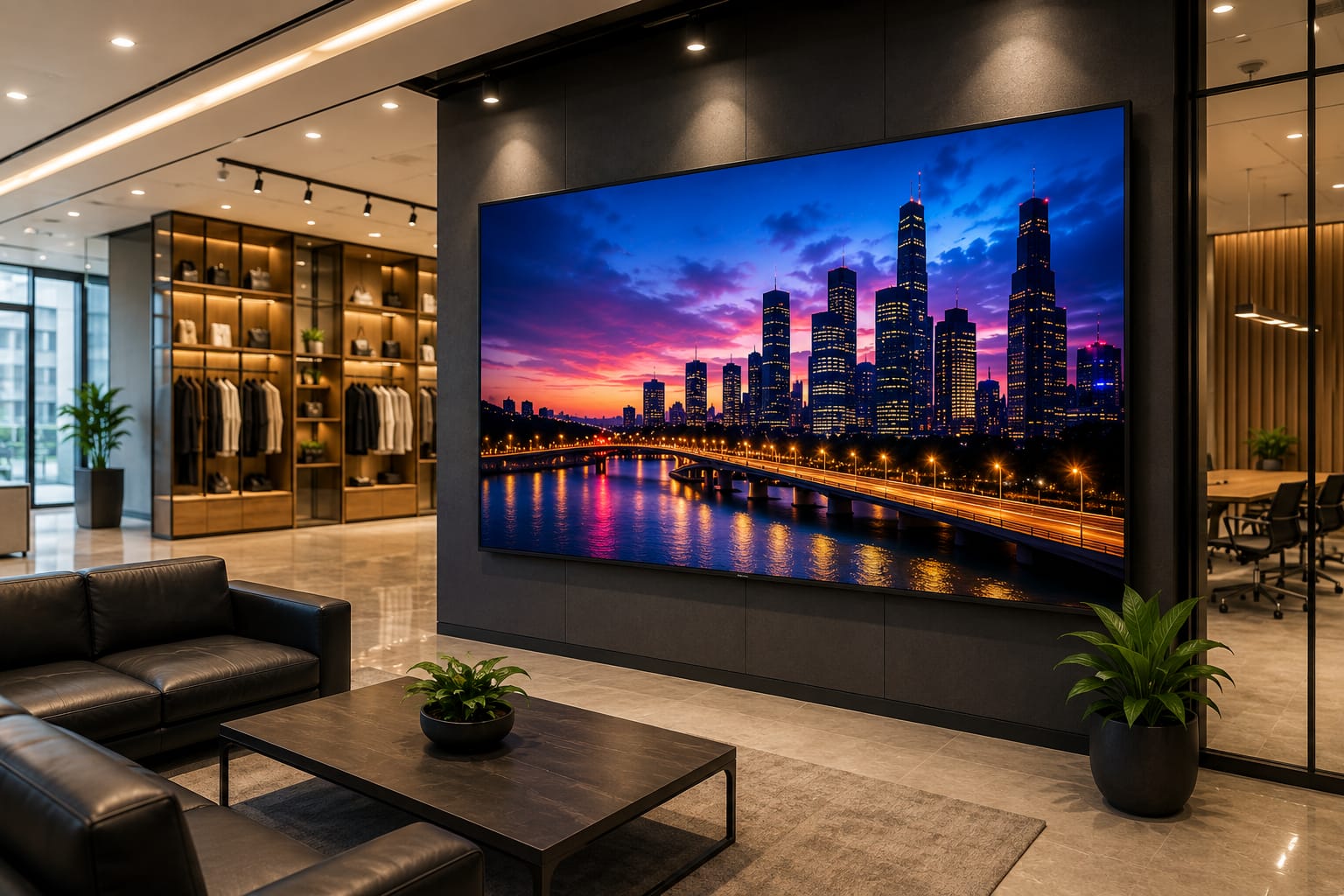

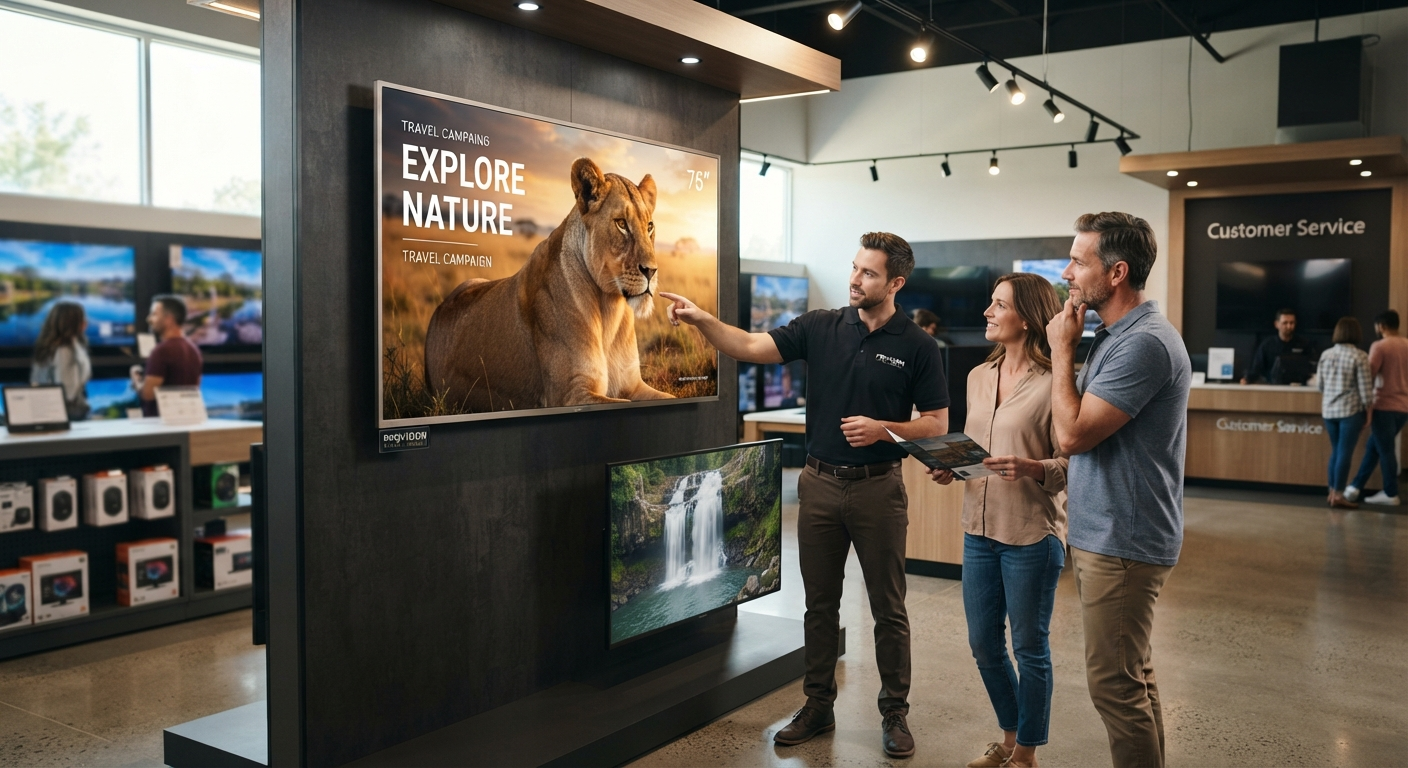
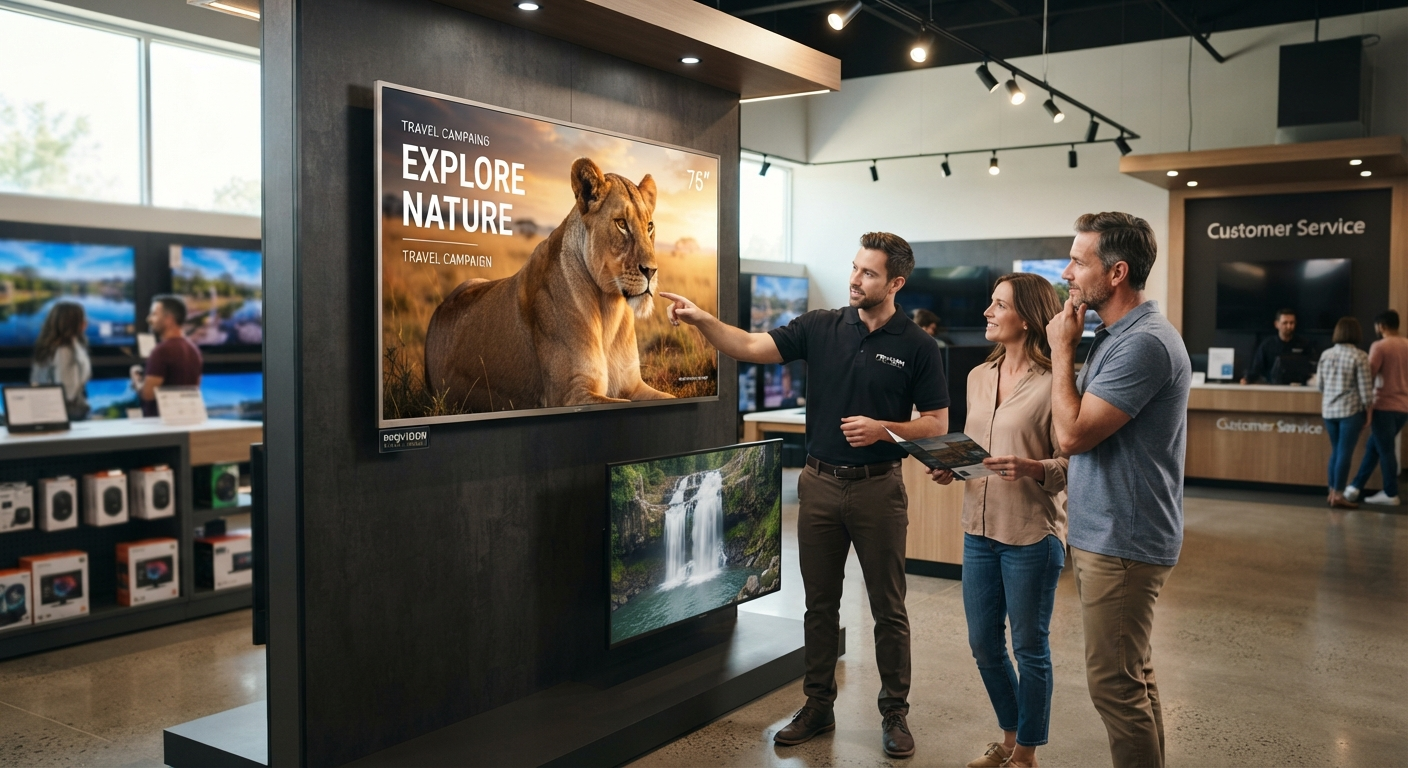
Walk into any busy retail store, clinic, or corporate lobby these days and you'll notice something different. That old poster board or clunky TV bolted to the wall? Gone. In its place, a crisp, bright screen doing the job of five employees at once greeting customers, showing prices, running promos, or just making the place look like it belongs in this decade.
This isn't a passing trend. It's a shift. And if you're running a business big or small you've probably already asked yourself whether it's time to make the jump too.
So, Is It Actually Worth Switching to Commercial Displays for Business Use?
Short answer: yes, for most businesses, and here's why it's not just hype.
I've talked to shop owners who resisted this for years because "a poster works fine" or "why fix what isn't broken." Then they made the switch and admitted almost sheepishly that they wished they'd done it two years earlier. The reason is simple. A Commercial Display doesn't just show information. It sells for you, informs for you, and represents your brand even when you're not standing there to do it yourself.
Here's what's actually pushing business owners toward this decision in 2026:
- Content changes in seconds, not days. No more reprinting menus or waiting on a sign shop.
- One screen replaces multiple static boards. Less clutter, more clarity.
- Customers notice movement. A still poster blends into the wall. A screen catches the eye.
- Remote updates. You can change what's showing from your phone, even if you're at another location entirely.
- Better first impressions. Whether it's a waiting room or a storefront, screens signal that a business is current, not stuck in 2015.
The Real Cost of Sticking with Old Signage
Let's be honest about something nobody likes to admit paper signage and printed banners cost more than people realize. Every reprint is money. Every outdated price tag is a customer complaint waiting to happen. Every faded poster is a tiny dent in how professional your business looks.
Business Display Solutions solve this quietly, in the background, without you having to think about it daily. You set the content once, update it when needed, and the screen does the rest rain or shine, morning shift or night shift.
Think of it like swapping a fax machine for email. Sure, the fax machine technically still works. But nobody's impressed by it anymore.
Why 2026 Is the Tipping Point
A few things converged this year that made switching to Commercial Displays for Business less of a luxury decision and more of a practical one:
- Prices dropped. Screens that used to cost a small fortune are now within reach for small and mid-sized businesses.
- Software got simpler. You no longer need an IT team to run a Digital Signage Display most platforms today are drag-and-drop.
- Customer expectations rose. People are used to seeing digital content everywhere from airports to coffee shops and a static sign now feels like a step backward.
- Remote work normalized remote management. Business owners running multiple locations got comfortable managing things from a laptop, and screens fit right into that habit.
What Businesses Are Actually Using These Screens For
It's not just retail. That's the part people get wrong when they picture Commercial Digital Displays they imagine only shopping malls and fast-food menus. The reality stretches much further:
- Restaurants — dynamic menu boards that adjust pricing for happy hour without printing a thing
- Corporate offices — meeting room schedules, KPI dashboards, and welcome screens for visitors
- Clinics and hospitals — queue numbers, wait times, and health tips running quietly in waiting areas
- Gyms and fitness studios — class schedules and motivational content that actually gets noticed
- Car dealerships — showcasing vehicle specs and financing offers right on the showroom floor
- Warehouses and factories — safety reminders and production metrics visible from across the floor
Each of these is solving a different problem, but the tool doing the heavy lifting is the same a well-placed, well-managed screen.
Commercial LED Display: Built for the Long Haul
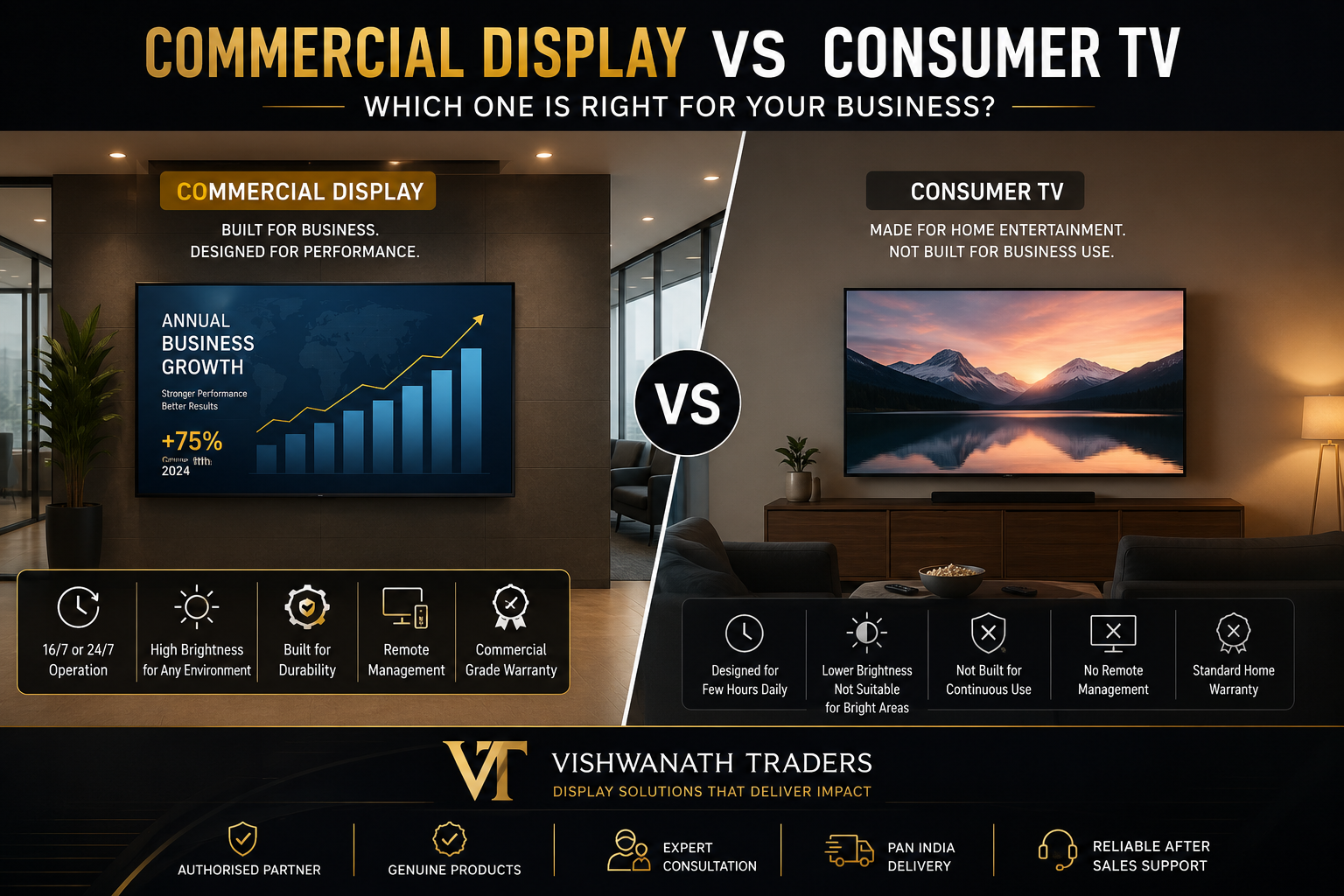
One thing that surprises a lot of first-time buyers is durability. A Commercial LED Display isn't your living room TV wearing a suit to work. It's engineered differently designed to run for extended hours daily, handle brightness in sunlit windows, and survive being on nonstop without burning out or dimming after a year.
Businesses that made the mistake of installing consumer-grade TVs learned this the hard way. Screens flickered, colors faded, and within eighteen months they were back to square one, spending money twice. Professional Display Solutions are built with commercial-grade panels specifically because business use is nothing like home use it's constant, demanding, and unforgiving of shortcuts.
The ROI Conversation Nobody Skips Anymore
Every business owner eventually asks the same blunt question: does this actually pay for itself?
Here's the honest answer it depends on how you use it, but the math usually works in your favor:
- Reduced printing costs add up fast when you stop reprinting menus, price lists, or promotional flyers every few weeks.
- Increased impulse sales happen when promotions are visible and timely a screen showing "today only" pricing does something static signage simply can't.
- Labor savings show up when staff no longer spend time updating boards or answering repetitive questions a screen could answer instead.
- Brand perception improves, and while that's harder to put a number on, it directly affects whether customers trust you enough to return.
A Commercial Screen for Business isn't an expense you write off it's closer to a quiet employee that never calls in sick and never stops working.
Choosing the Right Setup Without Overspending
Not every business needs the same setup, and that's honestly where a lot of buyers go wrong either underspending on something too weak for daily use, or overspending on features they'll never touch.
A few practical pointers before you buy:
- Match brightness to location. A dim screen near a sunny window is money wasted.
- Check running hours rating. If it'll run 10+ hours daily, don't buy something rated for casual home use.
- Think about content management. Look for Digital Signage Solutions that let you update remotely without a technician on speed dial.
- Size matters, but placement matters more. A smaller screen at eye level often outperforms a giant one people have to crane their neck to see.
Final Thought
Switching isn't about chasing trends for the sake of looking modern. It's about closing the gap between how your business actually operates and how it presents itself to the people walking through the door. Commercial Displays for Business have quietly become the standard, not because businesses were pressured into it, but because once owners saw the difference, going back to static signage felt like a downgrade.
If you're still on the fence, ask yourself this: would a five-minute update to your pricing or promotions today have felt effortless, or would it have meant a phone call, a print job, and a two-day wait? That answer usually tells you everything you need to know.