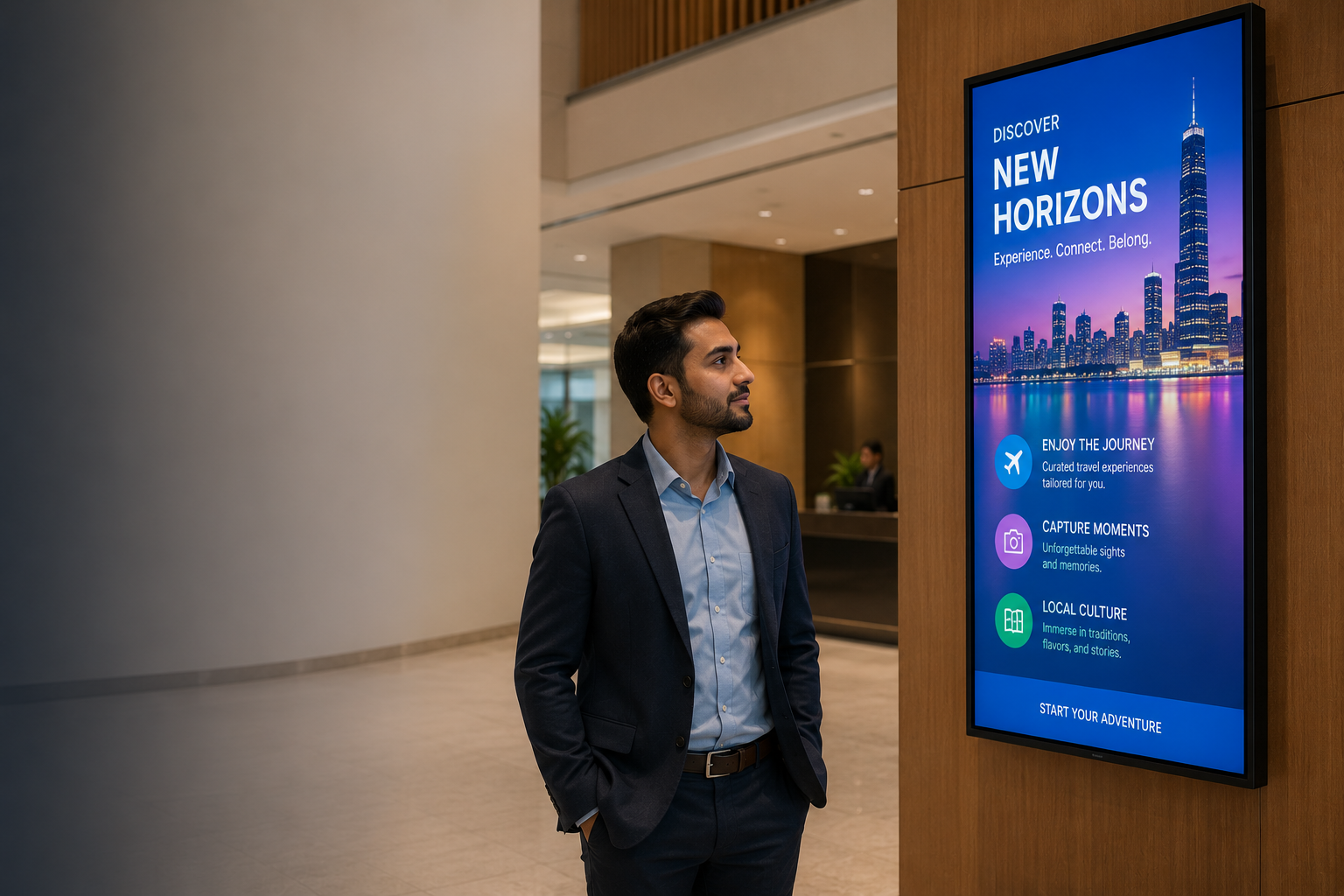

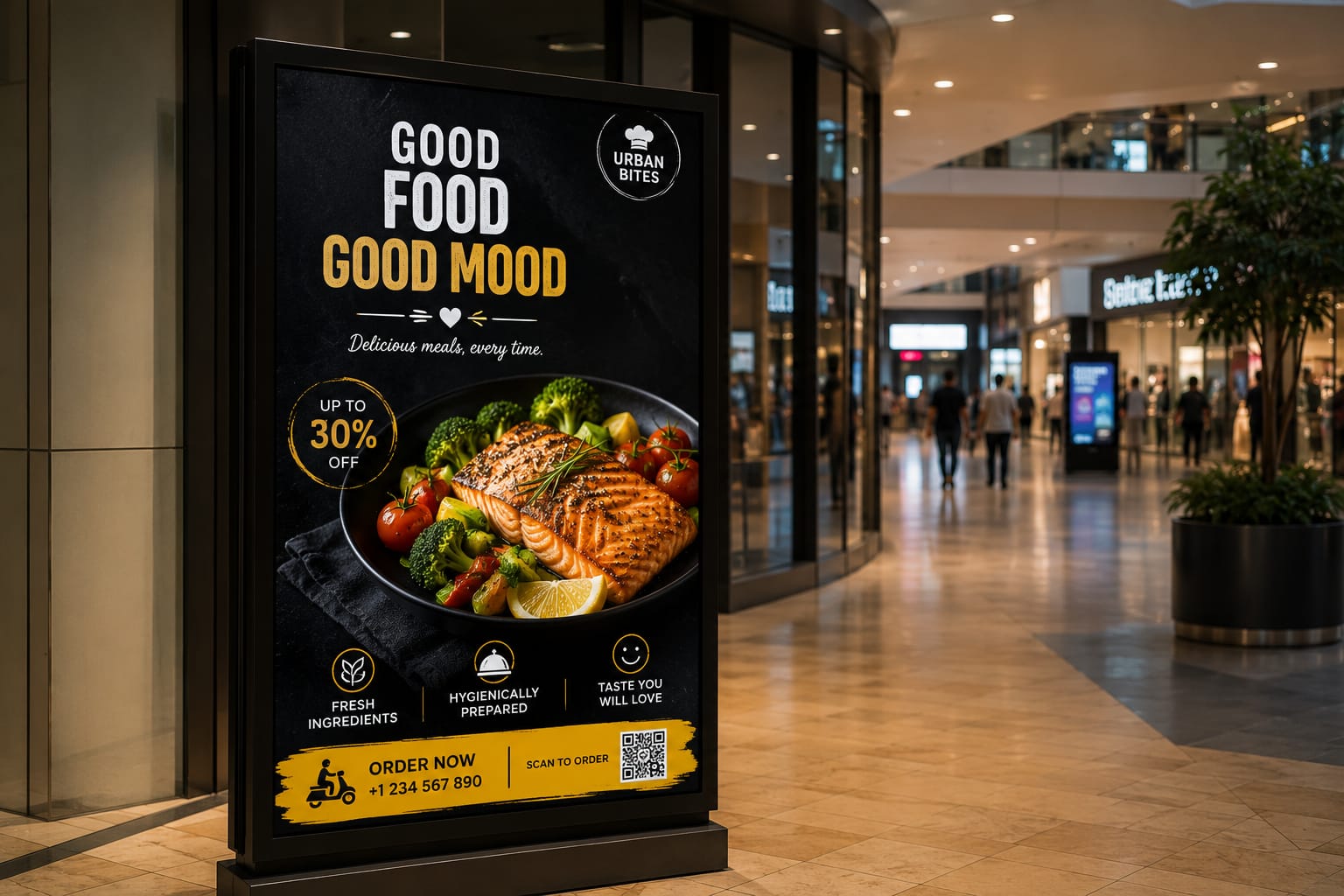
Walk into any busy shopping street today and count how many paper posters you actually stop to read. Not many, right? Now count the screens. That's the shift happening in front of us, and it's not a trend that's going to fizzle out next quarter.
A few years back, a friend who runs a small chain of cafes told me she was tired of reprinting menu boards every time coffee prices moved. She switched to a screen, updated prices from her phone in two minutes, and never looked back. That's a small story, but it captures exactly why more businesses are switching to digital signage it solves everyday headaches that static print simply can't.
Why More Businesses Are Switching to Digital Signage?
This is the question every business owner eventually asks once they notice competitors' windows glowing with moving content while theirs still has last season's banner curling at the corners. The honest answer is that digital signage isn't a luxury reserved for big brands anymore. It's become a practical business tool, and the reasons behind the switch are pretty grounded once you look past the shiny screens.
Here's what's actually driving the change:
- Print costs never stop. Every price change, every new promotion, every seasonal update means another trip to the printer. A digital signage display removes that cycle completely.
- Attention is harder to earn. People are used to scrolling, swiping, and skipping. Static posters blend into the background; movement and colour naturally pull the eye.
- Speed matters in business. If a product sells out or a price shifts, you need to update messaging instantly, not tomorrow after the print shop opens.
- Multiple locations need consistency. A single dashboard can push the same message to five stores or fifty, without anyone driving around with a stack of posters.
- Customers expect a modern experience. Fair or not, a business with clean screens is quietly read as more current, more trustworthy, more "on it."
None of this is about chasing flashy technology for its own sake. It's about running a business with fewer friction points, and that's precisely why more businesses are switching to digital signage rather than sticking with what they've always done.
What Digital Signage Actually Solves
Let's be practical for a second, because this isn't a gadget story it's an operations story.
1. It kills the reprint treadmill. Think about a gym that changes class schedules every month, or a restaurant that runs a lunch special on weekdays only. With traditional signage, someone has to design it, print it, laminate it, and physically swap it out. With a digital display, that same update takes minutes and costs nothing extra.
2. It turns downtime into selling time. Waiting rooms, checkout queues, reception areas these are moments where people are literally staring at a wall. A digital signage solution fills that dead time with something useful: promotions, reviews, wait times, or simple brand storytelling.
3. It centralises communication. For a company with several branches, keeping messaging aligned used to mean emails, phone calls, and hoping the regional manager actually put up the new poster. Commercial digital signage networks solve this with one control point — update once, and it reflects everywhere.
4. It adapts to the moment. A clothing store can push umbrella promotions the second it starts raining. A restaurant can highlight a dish that's about to expire from stock. Static print can never react like that.
A Question Business Owners Often Ask: Is Digital Signage Only for Big Brands?
No and this is where a lot of assumptions fall apart. People picture massive video walls in airports and think digital display solutions are out of their budget or too complex for a small operation. In reality, a single well-placed screen can do more for a small business than an entire wall of posters ever could.
Here's how it plays out at different business sizes:
- A small bakery can use one screen near the counter to rotate daily specials, show fresh-out-of-the-oven times, and highlight seasonal treats — no printing, no wasted paper when the menu changes.
- A local salon can display before-and-after photos, current offers, and staff availability, which builds trust with new walk-in customers who are deciding whether to book.
- A neighbourhood gym can show class timetables that update automatically and swap instructors without anyone touching a wall calendar.
- A mid-sized retail store can run a digital signage display near the entrance for new arrivals and near the till for upsells, treating each screen like a mini salesperson.
- A multi-branch restaurant chain can sync menu boards across every location the moment a price or item changes, keeping every branch on the same page instantly.
The common thread is that the technology scales down just as easily as it scales up. A small business doesn't need twenty screens and a media team one screen, set up properly, is often enough to see a real difference in how customers respond.
The ROI Angle Nobody Talks About Enough
Business owners care about numbers, so let's talk about them honestly. Digital signage isn't free, and anyone claiming it pays for itself overnight is stretching the truth. But over a year or two, the maths tends to favour the switch.
Consider what a mid-sized retail shop spends annually on printed posters, banners, and menu inserts design fees, printing costs, someone's time putting them up and taking them down. Add that up over twelve months and it's often more than the cost of one decent digital signage display running on a loop, updated remotely, lasting years.
There's also the softer ROI that's harder to put a number on but shows up in customer behaviour anyway:
- Customers linger a few extra seconds when something on screen catches their eye
- Staff spend less time managing physical signage and more time serving people
- Promotions can be tested and swapped without wasting printed materials on something that didn't work
- Brand image quietly improves just from looking current and well-maintained
This combination of lower ongoing costs and better engagement is a big part of why more businesses are switching to digital signage instead of treating it as an occasional marketing expense.
Making the Switch Without Overcomplicating It
If you're a director or founder weighing this up, you don't need to overhaul your entire business overnight. Start small. Pick the one spot in your business where customers spend the most idle time a waiting area, a checkout line, an entrance and put a single screen there. Watch how people react to it for a month. Most business owners find that one screen quietly proves its worth long before they're ready to expand further.
The businesses that get the most out of digital signage solutions treat them the same way they'd treat any other investment: start with a clear goal, measure what happens, then scale based on results rather than guesswork.
Final Thought
Signage has always been about communication telling people what you sell, what's new, and why they should care. What's changed is how fast that message needs to move. Paper simply can't keep pace with a business that changes its offers weekly, let alone daily. That's the real, unglamorous reason why more businesses are switching to digital signage not because it looks impressive, but because it keeps up with how business actually works today.
If your current signage still needs a printer, a ladder, and a Tuesday afternoon to update, that's usually the clearest sign it's time to make the switch.